
Journal · Interior design and decoration · Português
Refresh the decoration or commission an interior design project?
Identifying what needs to change is the first step in defining the work. Spatial organisation, comfort and the elements worth retaining help guide that choice.
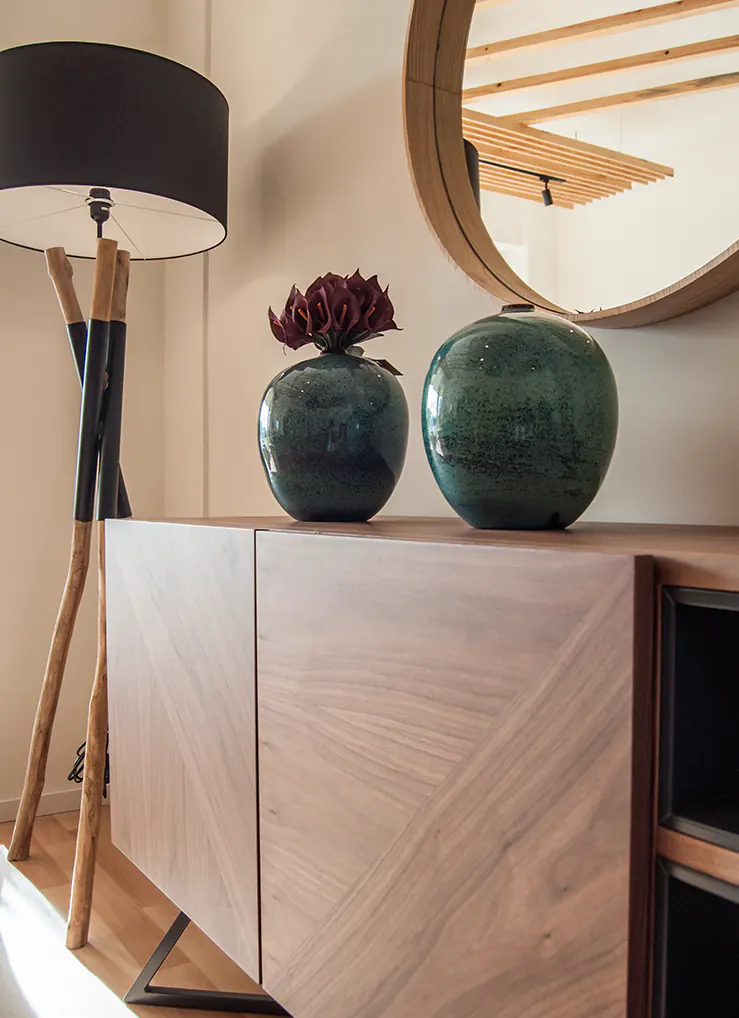
A home may need a new composition without requiring a major transformation. In other situations, replacing furniture or updating colours leaves difficulties with circulation, storage or use unresolved.
The choice between refreshing the decoration and commissioning an interior design project starts by identifying those needs. Beyond defining a style, it is important to understand what works, what limits everyday life and what the intended result should be.
When decoration can provide the answer
A decoration-focused intervention makes sense when the home’s organisation works well and the main need concerns the composition of the interior. Selecting furniture, textiles, rugs, curtains, decorative lighting and objects can improve comfort and bring coherence to the whole.
Proportions and relationships between pieces remain essential. A rug, table or sofa should be chosen according to the available space and intended use, as well as its individual appearance.
The refresh can also incorporate existing elements. Keeping a piece with personal meaning or furniture in good condition can provide a starting point for the new composition.
When the space needs closer study
If the difficulties concern layout, circulation or the relationship between functions, the organisation should be examined before purchases are made. A different sofa will not necessarily solve a restricted passage; additional storage may remain inadequate if it is poorly positioned.
An interior design project allows these relationships to be studied together. Layout, materials, lighting and furniture are developed as a coordinated response to the identified needs.
This approach may be relevant to a refurbishment, a new home or just one specific area. The scale of the intervention depends on the problem to be resolved. Commissioning a design project does not automatically mean changing the entire home or carrying out building work in every room.
Assessing before replacing
An initial assessment should distinguish functional limitations from aesthetic preferences. To structure that assessment, it is useful to record:
- The activities the space needs to accommodate.
- Areas where circulation or storage is insufficient.
- Pieces that should be retained.
- Elements whose dimensions or use are no longer suitable.
- The planned investment and readiness to undertake the work.
Photographs, plans and measurements turn a general impression into concrete information. Identifying these points before choosing materials or furniture helps establish priorities and assess solutions more carefully.
It is also useful to consider how the home may evolve. A workspace, new storage requirements or different use of shared areas may justify decisions that support future routines.
Retaining and integrating
A coherent interior can combine existing pieces, selected ready-made furniture and bespoke solutions. The aim is to understand each element’s role and its relationship with the room.
Before retaining a piece, its dimensions, condition and suitability for its intended function should be assessed. Where integration is viable, materials, colours and textiles can establish connections between elements from different periods or design styles.
The same principle applies to bespoke furniture: its use should answer a specific need relating to dimensions, storage or composition. Not every piece needs to be bespoke to achieve a consistent result.
Setting priorities and a sequence
Investment should reflect the importance of each decision. If changes to the layout, finishes or building services are involved, these need to be studied before the final selection of pieces that depend on them.
Even when the work focuses on decoration, an overall direction should be established before buying. Purchasing individual elements in isolation can constrain later choices and make it harder to coordinate proportions, finishes and functions.
A phased approach may be appropriate, provided there is an overall vision and a coherent sequence. The proposal should explain what will be developed at each stage and which decisions need to be established from the beginning.
Finding the right scope
Interior design and decoration are complementary disciplines. The initial assessment helps determine the level of intervention needed and define a service suited to the space, priorities and planned investment.
At BORAGUI, we bring these disciplines together in our residential interiors, with supply and installation where commissioned. Tell us about your home and what you would like to change so we can assess the appropriate scope.